Beginner Guide
Canoeing is easier than it looks
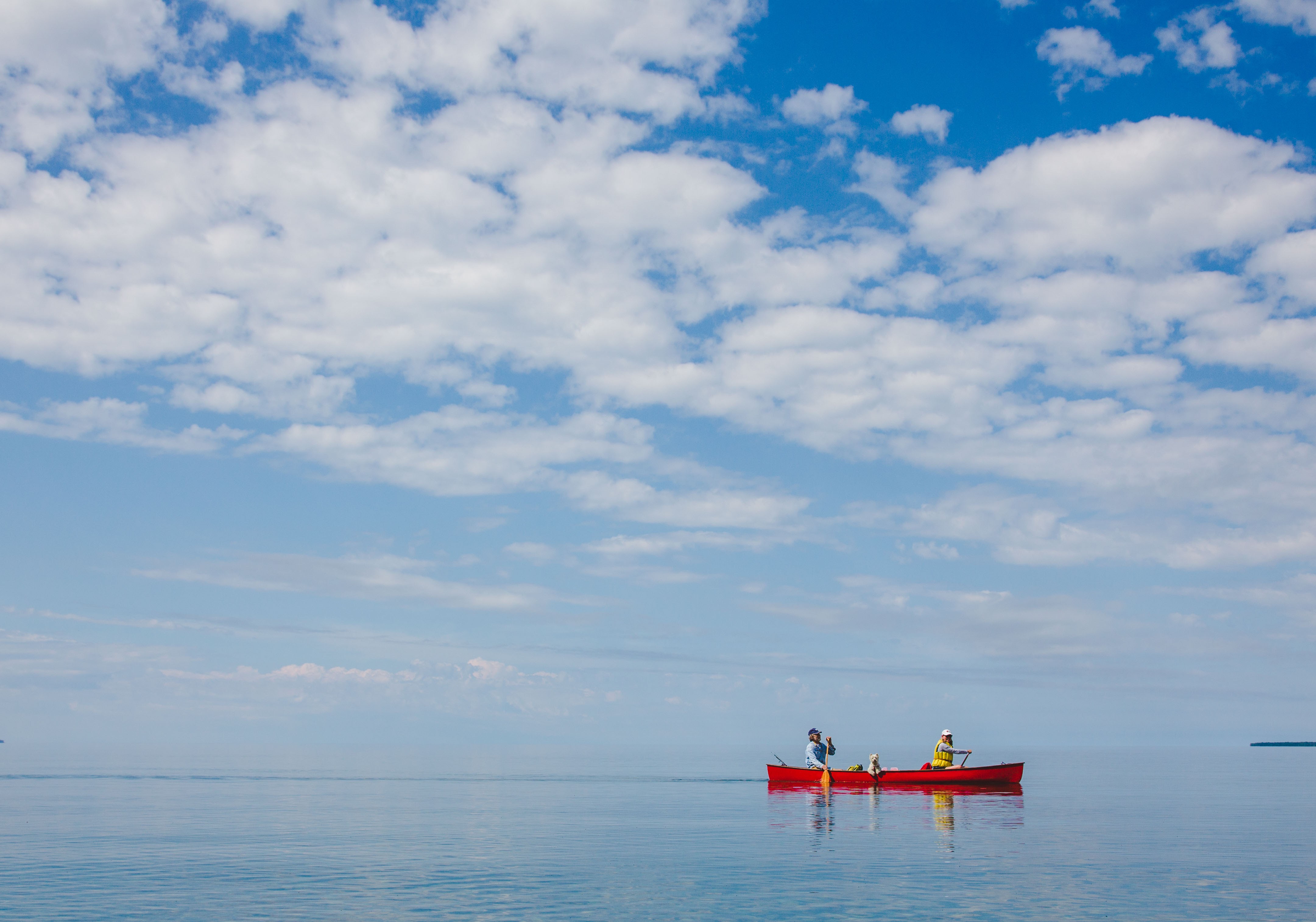
A canoe is one of the most forgiving boats you can learn in. On a calm lake, with a PFD on and a few basic strokes, you'll be gliding along in no time. Here's everything we tell first-timers when we drop off a canoe.
1. Put your PFD on first
Before you touch the canoe, put your life jacket on and do it up. Every rental from us comes with PFDs. Wear them the whole time, not under the seat.
2. Get in without tipping
Most tips happen at the shore, not out on the lake. To get in smoothly:
- Float the canoe in shallow water, parallel to shore if you can.
- One person holds the canoe steady while the other gets in.
- Step into the centre line of the canoe, staying low, and hold both sides (the gunwales).
- Move to your seat crouched over, keeping your weight low and centred.
- Once seated, steady the canoe with your paddle while your partner gets in.
Golden rule: keep your weight low and in the middle. Standing up or leaning over the side is how canoes tip.
3. Who sits where
- Stern (back): the steering seat. Put the more experienced or stronger paddler here.
- Bow (front): provides power and keeps an eye out for rocks and logs.
- Middle: our canoes take up to 3 paddlers, so a third person (or a kid) can sit in the middle, low and centred.
Paddle on opposite sides from your partner. Switch sides together when your arms get tired; the bow paddler calls the switch.
4. Hold the paddle properly
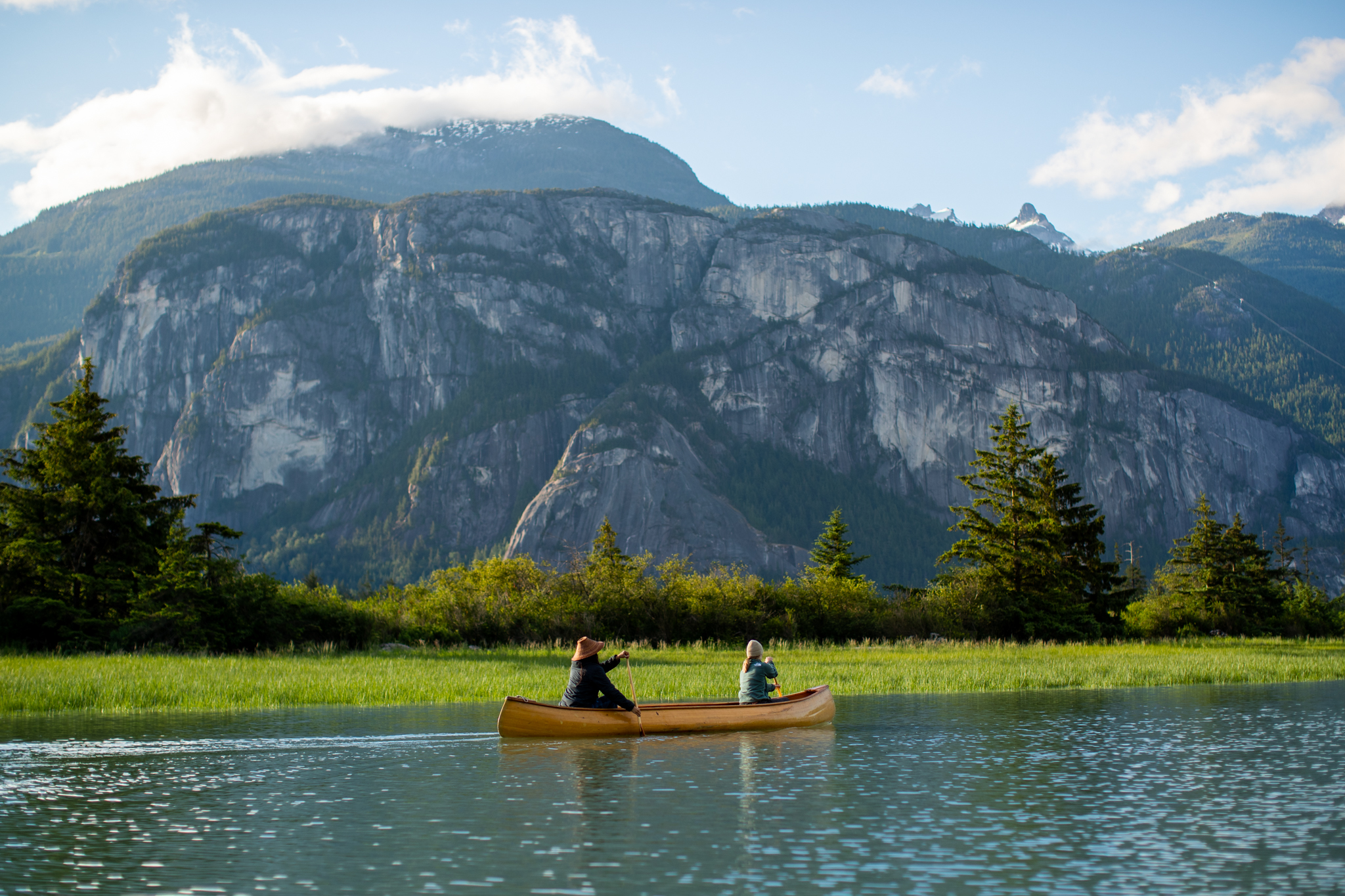
One hand on the top grip, the other a little above the blade on the shaft, roughly shoulder-width apart. If you're paddling on the right, your left hand is on top. Keep the top hand fairly still and pull with your lower arm and your core, not just your arms.
5. The forward stroke
Reach forward, put the whole blade in the water, and pull it back alongside the canoe to about your hip. Then lift it out and repeat. Long, smooth strokes beat short, frantic ones.
6. Steering: the J-stroke and the sweep
Because you're paddling on one side, the canoe naturally turns away from the stern paddler's side. Two strokes fix that:
- J-stroke (stern paddler): do a normal forward stroke, then at the end, turn the blade so your thumb points down and push the blade away from the canoe, making a "J" shape. It keeps you going straight. It feels awkward at first and then clicks.
- Sweep stroke (either paddler): a wide, arcing stroke from the front of the canoe out to the side and back. It turns the canoe away from the side you're sweeping on.
- Rudder (stern): drag the paddle behind you like a rudder to make small corrections.
7. Stopping and backing up
To stop, both paddlers put their blades in and hold them still, or paddle backwards. To reverse, do the forward stroke in reverse.
8. If you tip
On a calm lake, close to shore, a tip is usually just a funny story. Stay with the canoe (it floats), keep hold of your paddle, and swim or kick the canoe to shore. That's why we recommend first-timers stay close to the shoreline and pick small, sheltered lakes.
Best lakes for a first paddle
- Cat Lake: small, calm and motor-free. The easiest canoe day in Squamish.
- Browning Lake (Murrin Park): a compact lake with a granite backdrop.
- Alice Lake: sheltered, with easy launches and campground beaches.
- Alta Lake and Lost Lake, Whistler: easy launches near the Village.
More ideas in the best lakes to canoe near Squamish.
Quick safety checklist
- PFDs on and done up.
- Check the wind. Squamish afternoons can get gusty; mornings are usually calmer.
- Stay close to shore, especially when the water is cold.
- Bring water, sunscreen, a hat and a dry layer.
- Tell someone where you're going.
Questions
Is canoeing hard for beginners?
No. On a calm, small lake most beginners are comfortable within half an hour. Learning to steer takes a little longer, but you'll be moving where you want to go on your first day.
Who should sit in the back of a canoe?
The more experienced or stronger paddler usually sits in the stern (back), because that's where most of the steering happens. The bow (front) paddler provides power and watches for obstacles.
What is the best lake for a first canoe trip near Squamish?
Small, calm, motor-free lakes like Cat Lake, Browning Lake at Murrin Park, or Alice Lake are ideal for a first paddle.